Trees can add shade, privacy and natural beauty to a Brisbane property, but there are situations where a tree may become damaged, unhealthy or unsafe. Knowing when removal may be necessary can help homeowners deal with potential risks before they become more serious.
So, how do you know if a tree needs to be removed? The answer depends on the tree’s health, structural condition, location and the potential risk it poses to people or property.
Is a Dead or Dying Tree a Sign It May Need Removal?
A dead or severely declining tree should be assessed by a qualified professional.
Signs can include extensive dead branches, significant loss of foliage, damaged bark, fungal growth or a noticeable decline in the tree’s overall condition. However, not every unhealthy tree automatically needs to be removed.
Some trees can be managed through pruning or other tree-care measures. A professional assessment can determine whether the tree can be safely maintained or whether removal is more appropriate.
Brisbane City Council also identifies dead, dying, damaged and leaning trees as reasons for a tree removal assessment for Council trees.
Can a Leaning Tree Become a Safety Concern?
A tree that has developed a significant lean should be inspected, particularly if the lean is new or accompanied by other warning signs.
Look for changes in the soil around the base, exposed or damaged roots, cracks in the ground or movement of the tree after strong winds.
A leaning tree is not necessarily dangerous simply because it is leaning. Some trees naturally grow at an angle. What matters is whether the tree has structural defects or signs that its stability has changed.
Do Cracks or Cavities Mean a Tree Should Be Removed?
Large cracks, cavities or splits in the trunk or major branches can indicate structural problems.
These defects may become more concerning when they occur alongside dead branches, decay, significant leaning or storm damage. Because it can be difficult to determine the severity of internal decay by simply looking at a tree, professional assessment is recommended.
Brisbane City Council notes that tree risk assessments consider faults, damage, defects, pests and diseases when evaluating potential risks.
Can Storm Damage Mean a Tree Needs to Be Removed?
Brisbane storms can cause branches to break, trunks to split and trees to become unstable.
After a major storm, check the property from a safe distance for hanging branches, broken limbs, split trunks, exposed roots or significant changes to the tree’s position.
A damaged tree does not always need to be removed. In some situations, damaged branches can be pruned and the tree retained. However, severe structural damage may require removal.
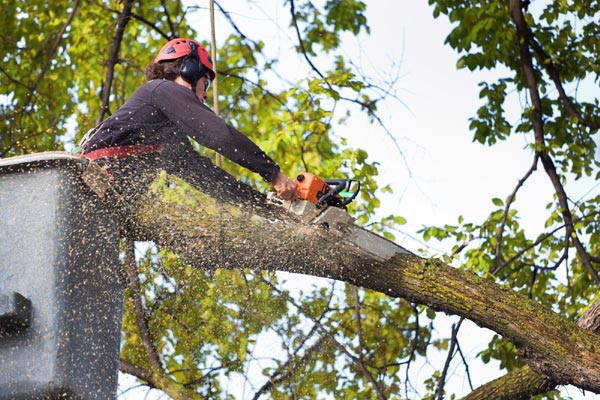
Avoid climbing or cutting a storm-damaged tree yourself, particularly when large branches or powerlines are involved.
What If Tree Roots Are Affecting Your Property?
Tree roots can sometimes create concerns around structures, drainage, paving, retaining walls or underground services.
However, removing a tree simply because roots are present is not always the appropriate solution. Root-related problems need to be assessed carefully because removing a tree can also have consequences for the surrounding area.
If roots are causing visible damage or you are planning construction close to an established tree, professional advice can help determine the safest approach.
Does a Tree Near a House Need to Be Removed?
Not necessarily.
A tree growing close to a house, driveway or other structure may be safely maintained through appropriate pruning. The important factors include the tree’s size, health, structure, growth direction and proximity to the property.
Branches growing towards roofs, powerlines or other structures may sometimes be managed through pruning rather than complete removal.
The goal should be to determine whether the tree can be safely retained before deciding that removal is necessary.
Tree Removal or Tree Pruning: Which One Do You Need?
This is one of the most important questions for homeowners.
Pruning may be suitable when:
- Only certain branches are damaged or overgrown
- The tree is generally healthy
- Branches are interfering with structures
- Dead or diseased branches need to be removed
- The tree can remain structurally safe after pruning
Removal may be considered when:
- The tree is severely damaged or structurally unstable
- The tree is dead or substantially declining
- Major trunk defects create a significant risk
- Storm damage has seriously compromised the tree
- Professional assessment determines that the tree cannot be safely retained
Brisbane City Council’s own assessment process can result in no action, pruning, health management or removal, showing that removal is not automatically the answer when a tree has a problem.
Do You Need Permission to Remove a Tree in Brisbane?
Before removing a tree, homeowners should check whether it is protected and whether Council approval is required.
Brisbane City Council states that protected vegetation may require a permit for removal or significant work. Council street and park trees also have specific protection requirements.
If you are unsure about the requirements for a particular tree, check the relevant Council rules before arranging removal.
When Should You Call a Professional?
If you notice a large crack, significant lean, storm damage, extensive dead branches, exposed roots or other signs of structural problems, it is worth arranging a professional assessment.
For homeowners looking for tree removal in Brisbane, Pink Tree Services provides tree removal, tree felling, tree lopping and stump grinding services.
Pink Tree Services also provides hedge trimming and yard cleaning to help maintain Brisbane outdoor spaces.
What Should You Do If You Think a Tree Is Dangerous?
Don’t attempt to remove a large or unstable tree yourself. Keep people and pets away from the immediate area and arrange a professional assessment.
The key is to look at the whole situation rather than one warning sign. A dead branch may only require pruning, while a severely split or unstable tree may require removal.
For Brisbane homeowners, the safest approach is to have the tree assessed and determine whether pruning, ongoing tree care or complete removal is the appropriate solution.